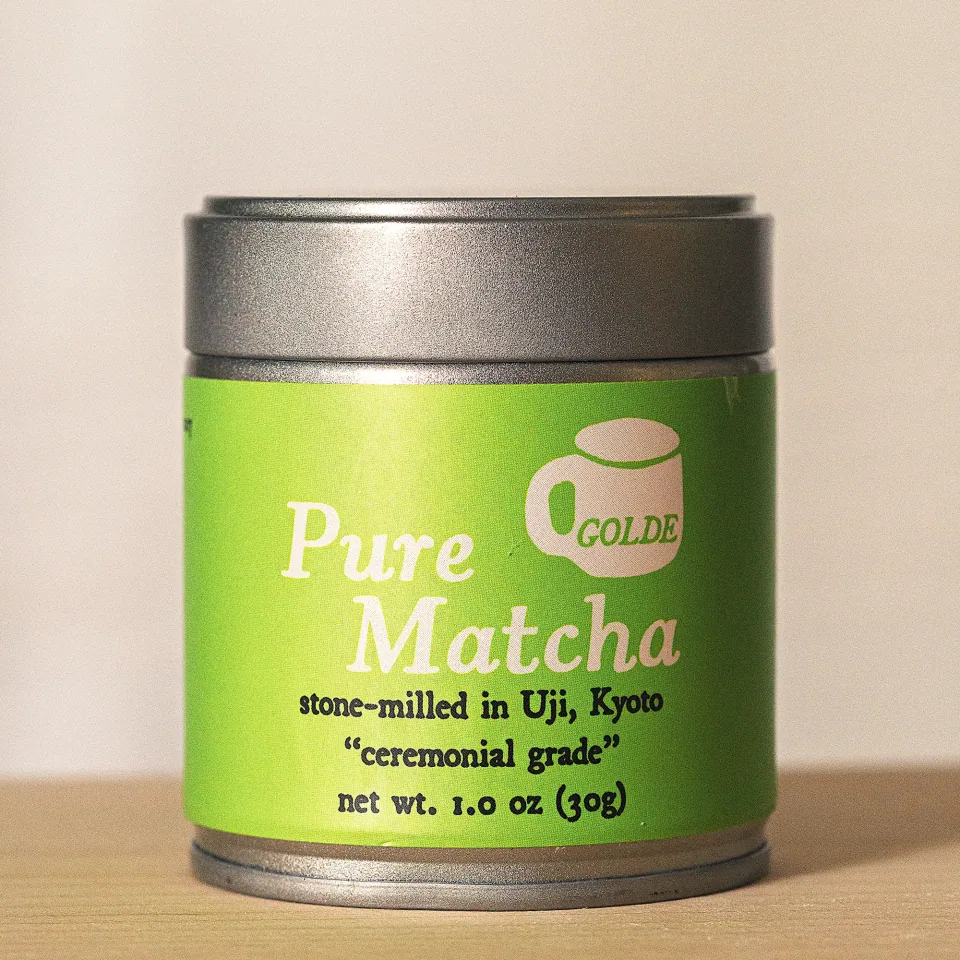
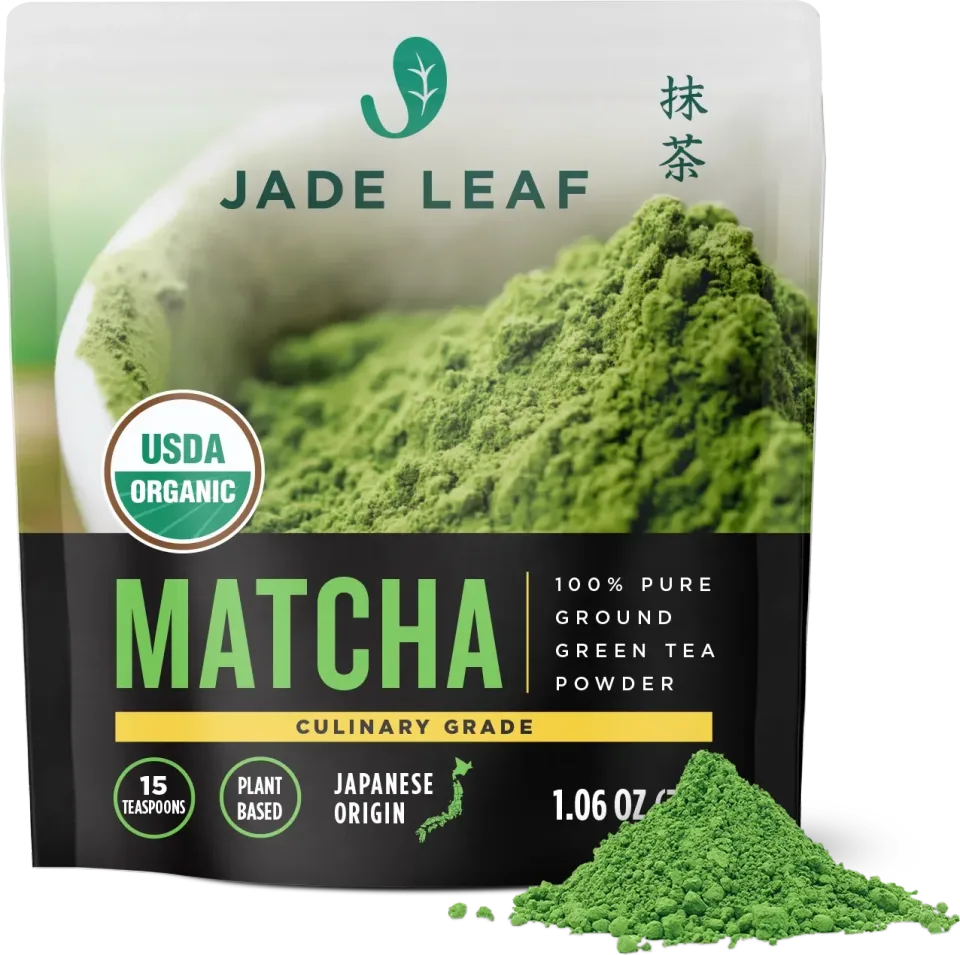
Jade Leaf Matcha Organic Culinary Matcha edges out Golde Pure Matcha, 7.5 to 6.7. It wins on flavor & cup quality, value, community love, while the Pure Matcha is stronger on quality & freshness.
Flavor
How they taste.
Golde Pure Matcha
Jade Leaf Matcha Organic Culinary Matcha
Side by side
Every detail, compared.
We may earn a commission when you buy through links on this page. It never affects our scores or what we recommend. How we make money
- Fresh Grass
- Earthy
- Umami
- • Wellness shoppers who value testing claims
- • Sweetened or milky lattes
- • Budget iced and hot lattes
- • Baking, smoothies and desserts
- Certified radiation-free and heavy-metal-free, per Golde
- Stone-milled in Uji by a family-run producer
- About 60 mg caffeine per serving, per Golde
- About $0.73 per 2 g serving
- USDA Organic and Non-GMO Project Verified
- Bold flavor that survives milk, syrups and baking
- About $2.60 per 2 g, high for a latte-focused matcha
- Creators report a bitter aftertaste
- Bitter and harsh as straight usucha
- Second-harvest leaves; Jade Leaf positions it for recipes and lattes, not straight tea
FAQ
Quick answers.
Which is better, Pure Matcha or Organic Culinary Matcha?
Jade Leaf Matcha Organic Culinary Matcha edges out Golde Pure Matcha, 7.5 to 6.7. It wins on flavor & cup quality, value, community love, while the Pure Matcha is stronger on quality & freshness.
Which costs less per cup?
Golde Pure Matcha works out to about $3.90 / serving and Jade Leaf Matcha Organic Culinary Matcha to about $0.73 / serving, based on typical retail prices when we last checked.
How do you score them?
Both are scored on the same five-factor rubric — weighted for flavor or performance, quality, value, sourcing or build, and community sentiment — using public specs, verified creator reviews and community consensus.